Why Lake-Effect Snow Varies So Much in Northern Michigan.
Why lake-effect snow can vary between nearby northern Lower Michigan towns, how wind affects snow bands, and what to check before a winter drive.
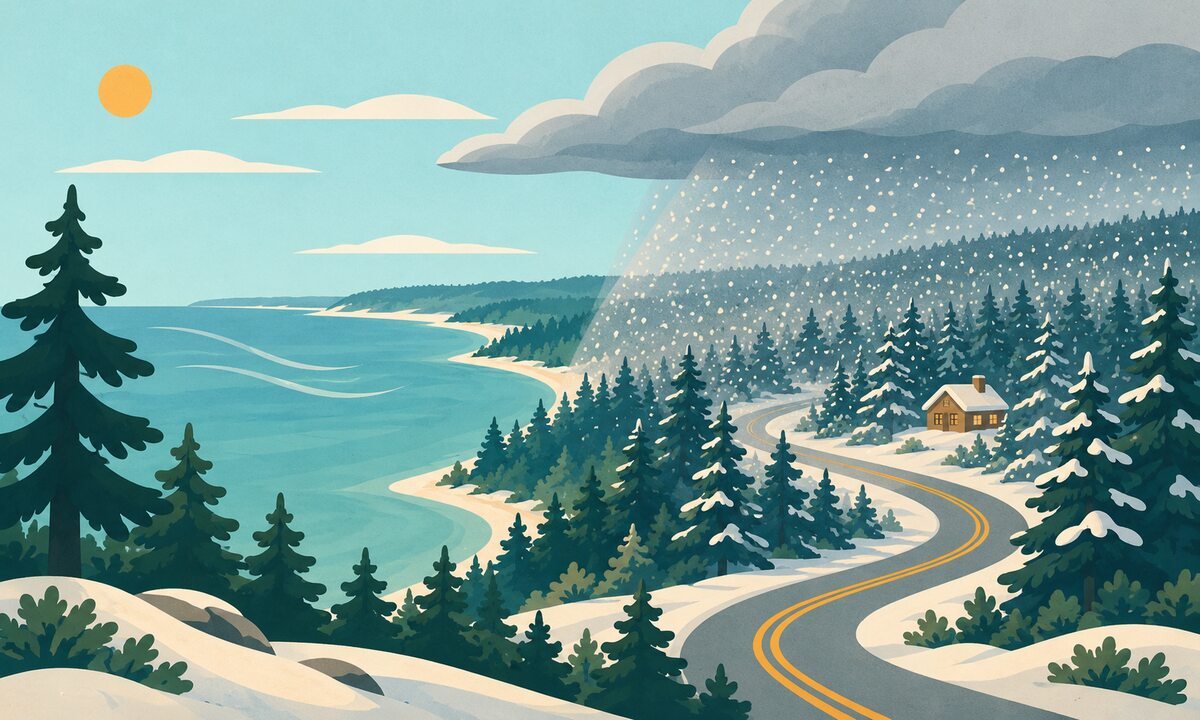
If you've ever looked at the forecast for a trip up north, you may have wondered how two towns that close together can have such different weather. A friend in Traverse City might be shoveling the driveway while someone in Gaylord is looking at blue sky. The next time around, the situation could be reversed.
Lake-effect snow often falls in narrow bands, and the wind determines where those bands go. One town can be right underneath a band of heavy snow while the next town gets very little. That's why I pay more attention to the route than to the weather icon for the place I'm going.
How Lake Michigan makes snow
In late fall and early winter, cold air moving across the relatively warm, open water of Lake Michigan picks up heat and moisture. As that air rises and cools, clouds and snow can develop. The wind carries the snow inland.
The National Weather Service in Gaylord explains how lake-effect snow works, including the role that the shape of the shoreline, local terrain, and distance the air travels over water play in determining where the snow falls.
What I find fascinating is how a fairly small shift in wind direction can change the picture. The lake hasn't moved. The towns haven't moved. The snow has a different destination.
Different winds, different towns
The Gaylord weather office has a useful guide to the areas that tend to see the most lake-effect snow under various wind directions. Here are three examples for northern Lower Michigan:
- North-northwest wind: Traverse City, Leland, and Kalkaska are among the places often affected.
- West-northwest wind: Boyne Falls and Gaylord may be in the path of heavier snow.
- Westerly wind: Boyne City, Indian River, and Petoskey are among the areas that can see heavier snowfall.
Those are typical patterns, not rules that predict snow for a particular address. Ice cover, temperatures, moisture, and other weather conditions matter too. I wouldn't use the wind direction alone to decide whether to make a trip.
Check the weather between your starting point and your destination
Let's say I'm planning a weekend drive up I-75 from Grayling to Mackinaw City. I'd check the forecast for Gaylord and Indian River along the way, too. If one of those places has a winter weather warning or a period of heavy snow forecast during my drive, the weather at the hotel isn't going to tell me much about that part of the trip.
Here's the routine I'd use:
- The day before: Look up the towns along the route using the NWS Gaylord forecast and alerts. Pay attention to the hours you expect to be driving, not just the day's snow total.
- Before leaving: Check the radar and updated warnings, then open MDOT's Mi Drive map for reported incidents, closures, and available camera views. Check the timestamp on any camera image.
- Make a decision: If dangerous conditions are expected during the drive, delay the trip or change the plan. A different route isn't automatically safer. If you're already traveling, have a passenger check updates or stop somewhere safe rather than looking at your phone behind the wheel.
The NWS winter safety guide has more advice for anyone who finds themselves traveling during a storm. I'd rather spend an extra hour over coffee than try to make up time in poor visibility.
A little more of the map
I built Up North Dashboard to bring northern Lower Michigan's weather and road information together. It's a handy place to begin looking at more than one location, then check the official forecast and road information before making travel decisions. I wrote more about why I check the source and timestamp on a dashboard in an earlier story.
One of the things I like about Michigan is that a short drive can take you to a very different landscape. In winter, it can take you to some very different weather, too. A few minutes looking at the whole route can help you enjoy the first part without being surprised by the second.
Disclosure: I built Up North Dashboard through I am Your Geek LLC.
Keep a little curiosity.
Save this guide for your next winter drive through northern Lower Michigan.
Save to PinterestThanks for reading.
See you in the next story.